 Ted Tanner, CEO and Co-Founder
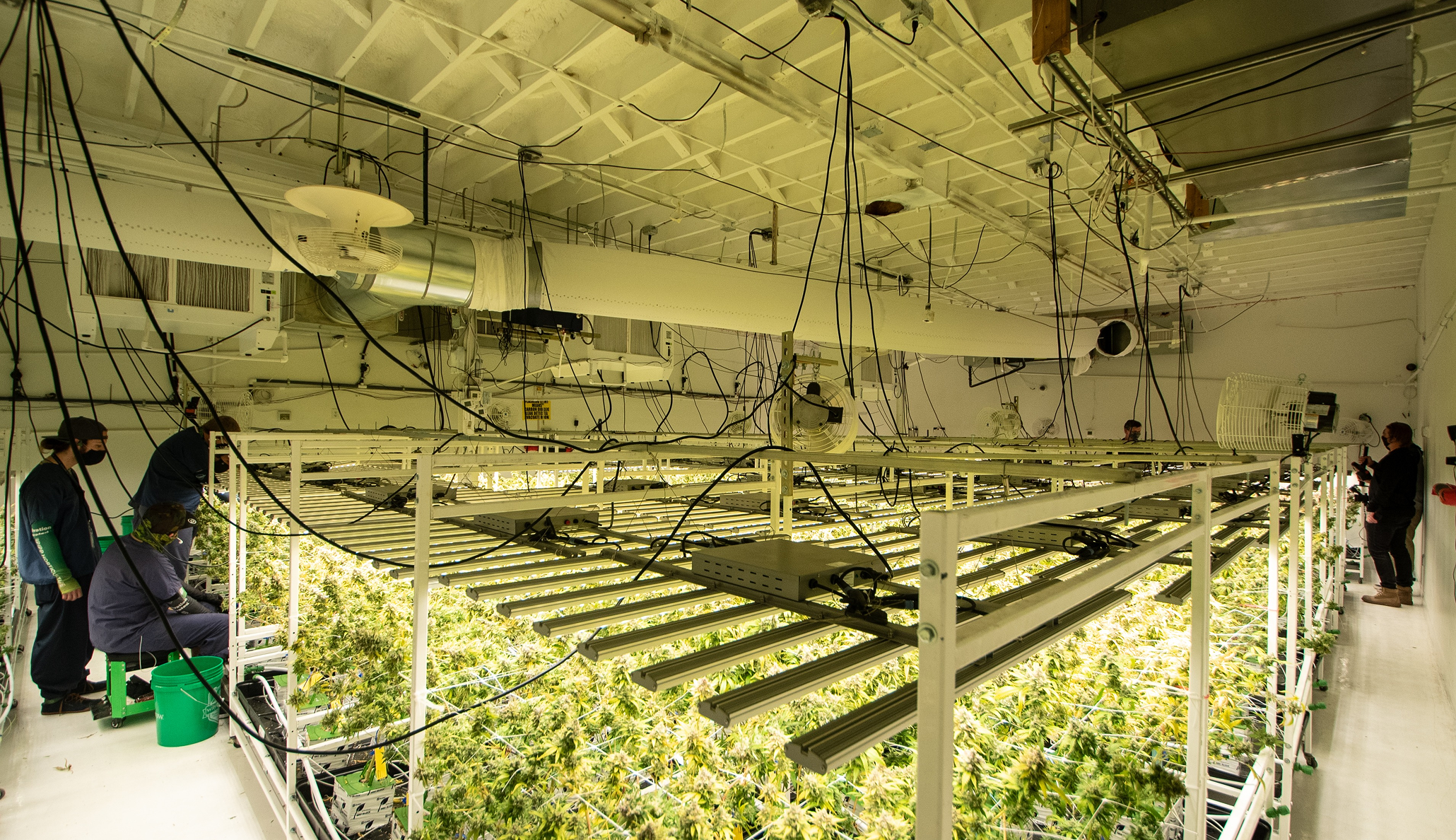
As you add rooms and SKUs, every new table becomes another chance for inconsistency. Yield swings between sites, failed tests, and “mystery” batch variation usually trace back to one issue: decisions are made on gut feel instead of consistent data and standards.
This article outlines how serious operators approach cannabis production scaling so quality improves as their footprint grows. It is written for teams who already run tight rooms and now need those same standards to hold across buildings, states, and partners.
What Breaks First When You Scale
The first thing to slip is process discipline: A dialed-in recipe in your flagship facility turns into several slightly different versions once you add new buildings, shifts, and teams. Watering schedules, target moisture levels, and temperature ranges quietly diverge from what is written in your SOPs.
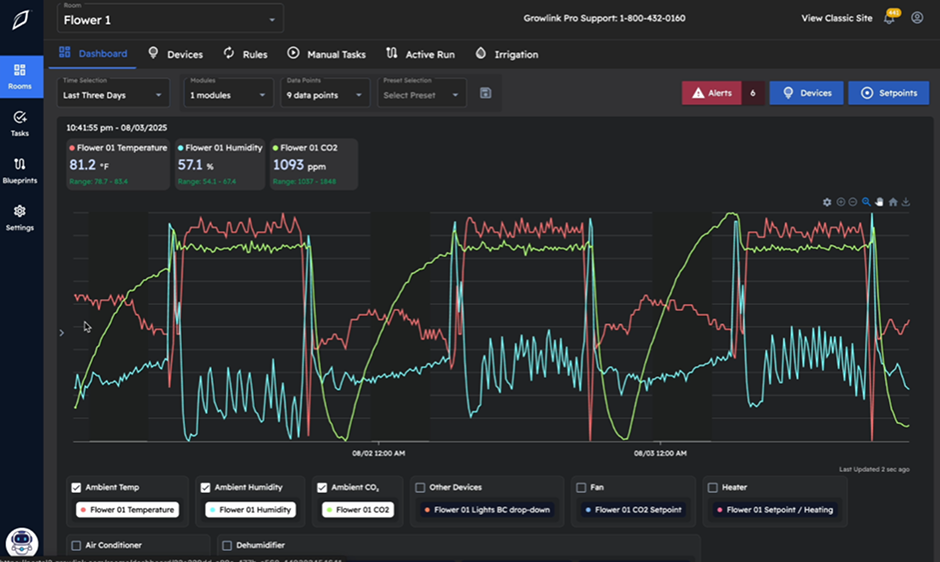
The second failure is lost visibility. Handwritten logs, disconnected controllers, and “I just know this strain” intuition do not scale beyond a couple of rooms. Without clear trends for root-zone moisture, nutrient strength, and room conditions, problems usually surface only after a batch fails testing or a harvest report looks off.
Finally, manual controls reach their limit. Simple timers and one-off fertigation rigs cannot keep up with dozens of zones, overlapping crops, and different recipes. Your best people spend their days reacting to issues instead of preventing them.
Make Quality Measurable
For a multi-state operator (MSO), quality shows up as target yield per square foot, potency ranges, terpene levels, visual appeal, and reliable test results. If these targets are not clearly defined, it is difficult to protect them as you expand.
Those outcomes are driven by a few core levers:
-
How warm and humid the rooms are
-
How much light plants receive
-
How often and how much you irrigate
-
How strong the nutrient solution is
-
How you dry and cure the crop
When those details live only in people’s heads, results shift every time a key team member moves on or a new site comes online.
This is where standardized cultivation “blueprints” become valuable. Once you have dialed in a cultivar in one room, that approach—setpoints, irrigation strategy, nutrient program, and basic workflow—should be captured, updated over time, and deployable to any facility. Without this, you are not truly scaling production; you are simply adding more rooms and hoping for similar outcomes.
Turn Blueprints into a Scalable System
Once those blueprints are defined, the next move is to turn them into a practical, step-by-step system that every facility can follow, measure, and continuously improve.
Step 1: Create a Single Source of Truth
Quality scales with a single source of truth that every facility uses for how they water, manage climate, feed, scout, and harvest. When those standards are directly connected to how your controllers and schedules are configured, they turn your goals into consistent practice instead of room-by-room interpretation.
Centralizing control and monitoring is part of this first step. Instead of juggling separate devices and interfaces, leading operators use one software platform to see sensors, irrigation, and environmental controls across all facilities. That allows a head of cultivation to spot trends and issues across sites in real time, not weeks later in a spreadsheet.
Step 2: Automate the Biggest Levers
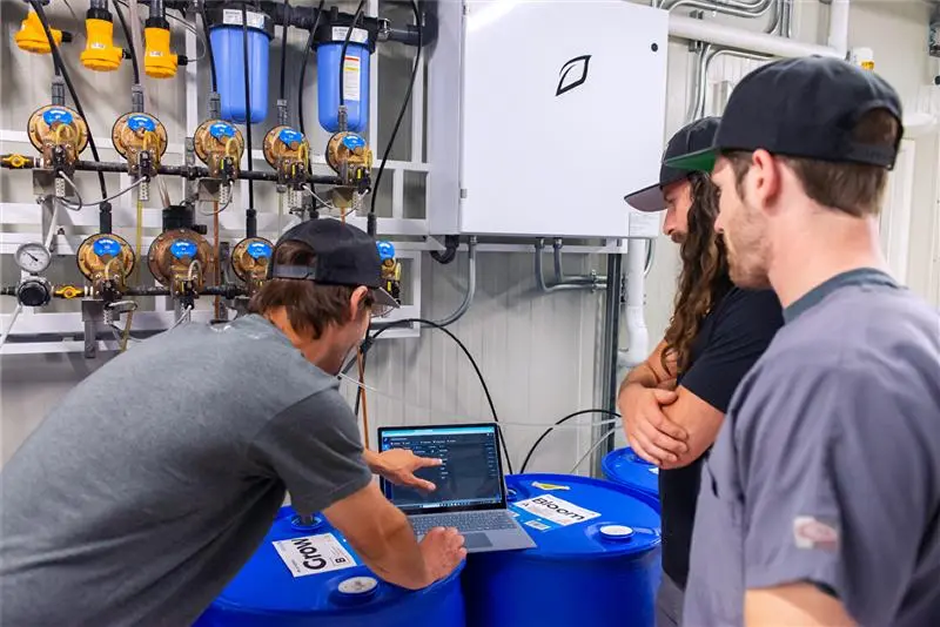
Once the playbook is clear, you can automate the work that has the biggest impact on consistency. Irrigation is usually first. Overwatering is still one of the fastest ways to hurt yield and quality, particularly at scale. Intelligent irrigation systems that use sensor feedback and clear rules, rather than simple timers, keep irrigation shot timing and plant dry-down more consistent across rooms, shifts, and facilities. They make it easier to automate what your best irrigator already does by feel.
Climate is next. Running lights, dehumidifiers, and HVAC as separate systems might work in a small grow, but in a large facility it almost guarantees swings in temperature and humidity. Integrated environmental controls that understand the total load are the only reliable way to maintain stable conditions as canopy and seasons change.
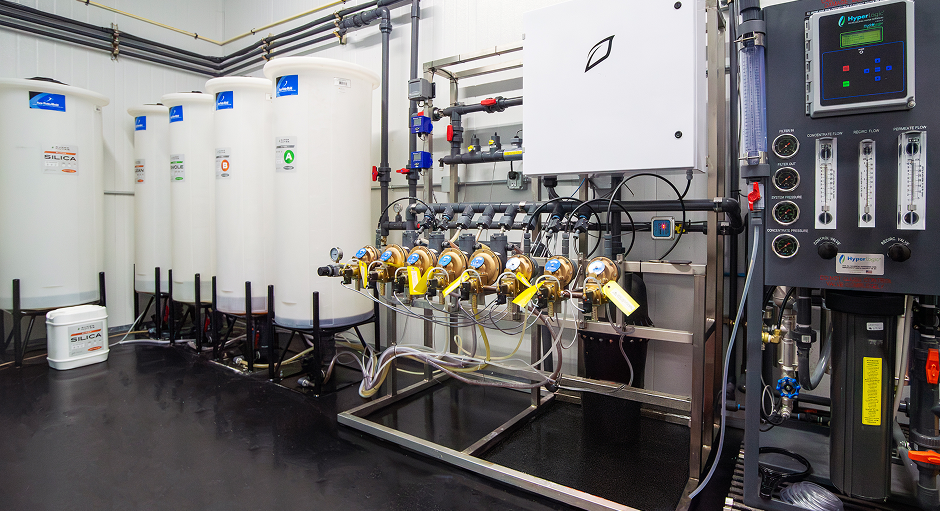
Nutrient delivery completes the picture. Hand-mixed tanks and inconsistent fertigation routines introduce hidden variability, especially when shifts change. Automated nutrient delivery with continuous monitoring of strength and pH stabilizes feed so every zone receives the same mix, making it easier to see the impact of changes in genetics, lighting, or irrigation strategy.
Step 3: Use Data to Improve Every Cycle
With standards and automation in place, data becomes your scaling engine. When controls and sensors are unified, you can finally compare performance across rooms and facilities in a meaningful way. Yield, potency, irrigation patterns, and environmental profiles can be lined up side by side, turning high-performing rooms into templates and making underperformers easy to spot.
Every harvest becomes a learning cycle rather than a one-off result. When logs live in software instead of binders, you can trace a failed test back to specific dry room conditions or a yield drop back to a particular change in the grow. Those insights should feed directly into updated blueprints you can roll out to similar rooms or sites with minimal friction, supported by AI-driven tools that highlight issues and suggest small, targeted adjustments before they become expensive problems.
Start Small, Then Scale Big—Without Losing Quality
You do not have to overhaul your entire operation for this approach to work. Start with a single room or set of tables, instrument it properly, and bring irrigation, climate, and nutrient delivery under one coordinated system. Measure the impact on yield, labor hours, and pass rates, then use that internal evidence to justify expanding to additional rooms and states.
Modular, retrofit-friendly hardware makes this realistic. Systems that connect to existing equipment allow you to upgrade room by room rather than all at once. That “start small, scale big” approach keeps capital spending manageable and avoids major disruption while you strengthen your operating system.
Successful MSOs can make every new square foot behave like their best-performing room, cycle after cycle. When your decisions are standardized, automated, and informed by real data, you do not have to choose between scale and quality—you can build both into the way you grow.
